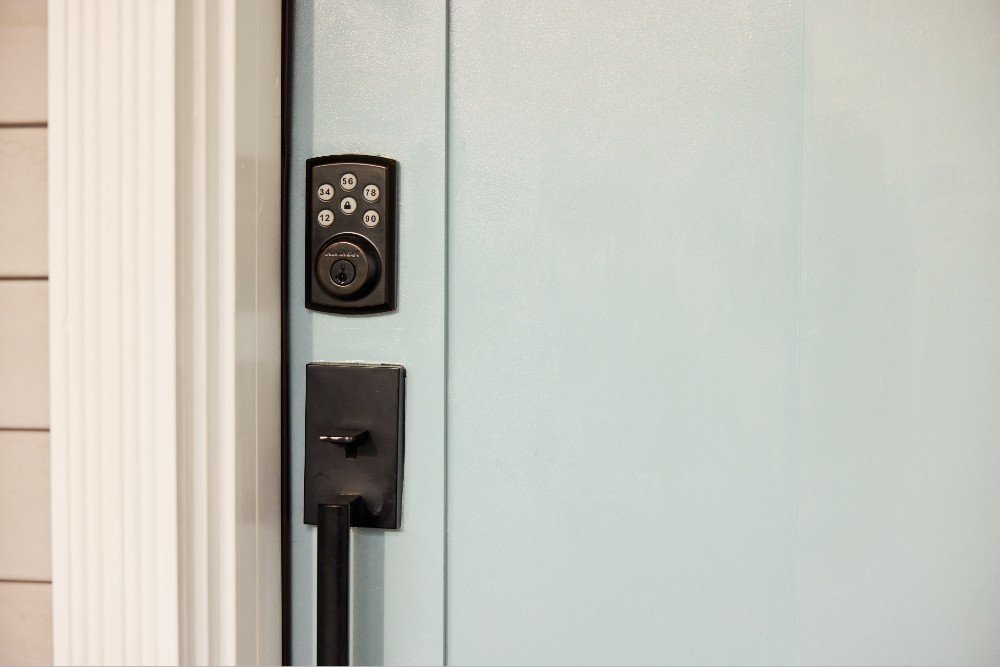
Every time I bring up smart locks vs traditional locks with someone renovating their entryway, the conversation splits into two camps almost instantly — the “why fix what isn’t broken” group and the “technology just makes life easier” group. Both have a point, honestly.
Let’s actually break down the real differences instead of just picking a side.
The Core Difference
The main difference in smart locks vs traditional locks comes down to access method and monitoring — traditional locks use only a physical key, while smart locks offer app control, codes, fingerprints, or remote access, along with entry logs you simply can’t get from a standard deadbolt.
1. Security Comparison
Contrary to popular worry, quality smart locks aren’t inherently less secure than traditional ones. Reputable brands use encrypted communication and have anti-tampering alerts. That said, a cheap, poorly-reviewed smart lock can absolutely be a weak point — so brand matters more here than with a simple mechanical lock.
2. Convenience Factor
This is where smart locks clearly win. No more fumbling for keys with grocery bags in hand, no more worrying about lost keys, and you can grant temporary access codes to guests or house help remotely.
3. Cost Comparison
- Traditional locks: ₹500-3,000 for a quality deadbolt
- Smart locks: ₹6,000-20,000 depending on features (fingerprint, app control, video integration)
4. Power Dependency
This is the honest downside of smart locks — they run on batteries, and while most have backup key access and low-battery alerts well in advance, it’s still one more thing to maintain compared to a traditional lock that simply never needs charging. [link to related guide about best home security systems here]
5. Installation Complexity
Traditional locks are simpler to install and repair — any local locksmith can handle it. Smart locks sometimes require specific door thickness or existing lock compatibility, so measure before you buy.
Who Should Choose What?
Picture a joint family home in Jaipur with elderly parents, working couples, and kids coming home at different times. A smart lock with individual codes for each person makes daily coordination genuinely easier — no more spare-key stress.
On the other hand, a single-person rental flat with no complicated access needs? A good traditional deadbolt does the job just fine, with zero maintenance worry.
- Choose smart locks if: multiple family members, frequent guests or help, want entry logs
- Choose traditional locks if: simple household, budget-conscious, prefer zero-maintenance simplicity
A Middle Ground Option
Some homeowners install both — a traditional deadbolt as backup alongside a smart lock for daily use. It’s slightly more expensive upfront but eliminates the “what if the battery dies” worry entirely.
FAQs
Q1. Are smart locks hackable? Any connected device carries some risk, but reputable smart locks use strong encryption, making hacking impractical for casual intruders.
Q2. What happens to a smart lock during a power outage? Most smart locks run on their own battery, independent of home power, and include physical key backup options.
Q3. Can I install a smart lock on my existing door? Most modern smart locks are designed to retrofit standard door preparations, but always check compatibility specs first.
Q4. Do smart locks work with existing home security systems? Many integrate with broader smart home systems, letting you control locks alongside cameras and lighting from one app.
Q5. Which lasts longer, smart locks or traditional locks? Traditional locks generally last longer with fewer components to fail, though quality smart locks now average 3-5 years before needing battery or unit replacement.
Conclusion
There’s no universal winner in smart locks vs traditional locks — it genuinely depends on your household’s needs and how much convenience is worth to you. If daily coordination and remote access matter, go smart. If you want dead-simple, low-maintenance security, a good traditional lock still does its job perfectly well.
Suggested Alt Text: “Comparison of a smart door lock with keypad and a traditional deadbolt lock side by side”