Water is one of those everyday essentials that most people take for granted until something doesn’t seem right. Perhaps a glass of tap water has an unusual taste, mineral deposits keep appearing on bathroom fixtures, or a business struggles with scale buildup in its equipment. These problems might look unrelated, but they often point to the same underlying issue: water quality.
The tricky part is that there’s no single treatment system that solves every water problem. A restaurant, a manufacturing facility, and an ordinary family home can have very different requirements. Some need to control mineral hardness, others need to reduce specific contaminants, and some require water with carefully controlled purity.
Understanding the available treatment options makes it easier to invest wisely. Rather than choosing equipment based on impressive marketing claims, it’s better to start with the water itself and work backward from there.
Why Water Quality Matters More Than You Might Think
Water contains naturally occurring minerals and may also pick up other substances as it moves through soil, pipes, storage tanks, and treatment facilities. Many dissolved minerals aren’t harmful at typical concentrations, but they can affect taste, cleaning performance, and equipment lifespan.
Hard water is a familiar example. Calcium and magnesium can accumulate inside pipes, water heaters, dishwashers, and industrial equipment. Over time, this mineral scale may reduce heat transfer, restrict flow, and increase maintenance needs.
Other concerns require a different response. Sediment can clog equipment, certain metals may present health risks, and microorganisms can make untreated water unsafe. In commercial settings, water quality can also influence product consistency, cleaning procedures, and manufacturing processes.
That’s why testing should come before purchasing treatment equipment. A laboratory analysis can help identify the substances that need attention and establish a sensible starting point for selecting the right technology.
Commercial Water Softeners and Filters for Demanding Environments
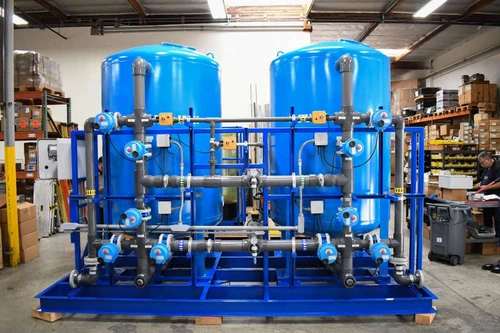
Businesses often use considerably more water than households, and their equipment may be less forgiving when water quality changes. Hotels, laundries, restaurants, hospitals, and manufacturing facilities can all face problems associated with mineral buildup, sediment, or unwanted substances in their water supply.
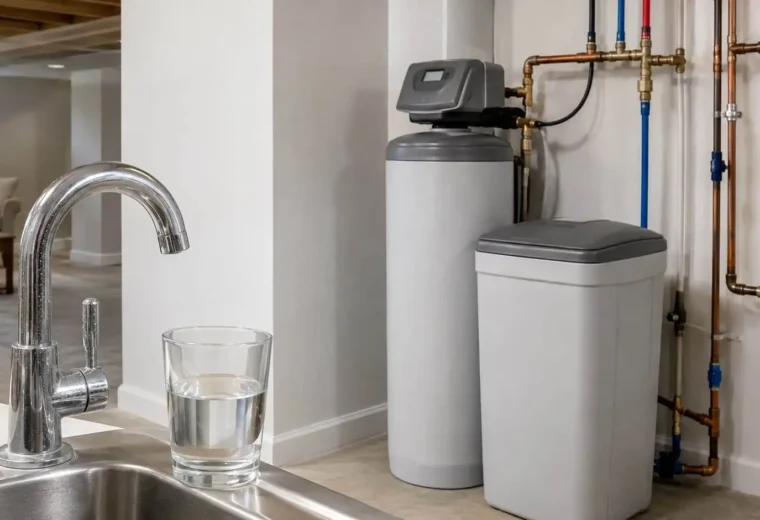
Well-designed commercial water softeners & filters can help address these challenges, provided the equipment is selected for the specific application. A commercial softener typically uses ion exchange to reduce calcium and magnesium, helping control scale in boilers, water heaters, dishwashers, and other equipment.
Filtration serves a different purpose. Depending on the filter media, it may remove suspended particles, reduce chlorine taste and odor, or target particular contaminants. Some businesses need several treatment stages because their incoming water has more than one issue.
Consider a busy restaurant. Hard water can leave spots on glassware and contribute to scale in dishwashing equipment. A properly sized softener may help reduce these problems, while a separate filtration system could improve the taste of drinking water. Neither system should be expected to perform the other’s job.
Capacity is another important consideration. Commercial systems must accommodate peak water demand, not just average daily consumption. A system that’s undersized may struggle during busy periods, while an unnecessarily large installation can increase costs.
Before making a decision, consider water usage, incoming pressure, maintenance requirements, and the consequences of equipment downtime. A qualified water treatment specialist can help calculate the appropriate capacity and recommend a practical setup.
Understanding Water Sanitization and Deionization
Some applications require more than ordinary filtration or softening. Water used in laboratories, pharmaceutical production, electronics manufacturing, and certain food processing operations may need specific levels of microbial control or dissolved-ion removal.
This is where water sanitization & deionization become relevant, although they address two different aspects of water quality.
Sanitization involves reducing or inactivating microorganisms using suitable methods. Depending on the application, these may include ultraviolet treatment, heat, or carefully controlled chemical disinfection. Each method has its own limitations. For example, UV treatment can inactivate susceptible microorganisms when properly designed and operated, but it doesn’t remove dissolved chemicals or provide a lasting disinfectant residual throughout the plumbing system.
Deionization, on the other hand, removes dissolved ions using ion-exchange resins. It can produce water with very low ionic content, making it useful for laboratory work, rinsing sensitive components, and certain manufacturing processes.
However, deionization doesn’t automatically make water microbiologically safe. Nor does a low conductivity reading prove that every possible contaminant has been removed. Organic compounds, particles, and microorganisms may require separate treatment and monitoring.
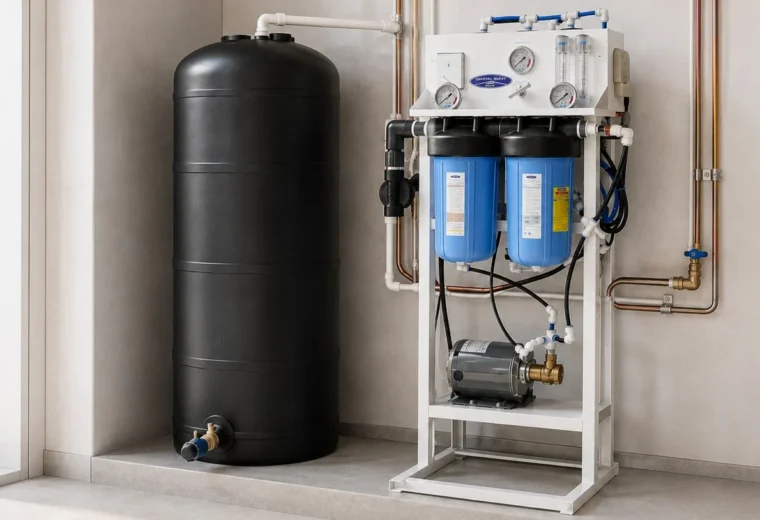
Businesses should therefore define their required water quality before selecting equipment. Depending on the application, the treatment train might include pretreatment, reverse osmosis, deionization, sanitization, and appropriate storage or distribution controls.
When Water Distillers Make Sense
Distillation is another established method of treating water, and it works quite differently from conventional filtration. The process heats water to produce vapor, then cools that vapor so it condenses into a separate collection vessel.
Because many dissolved salts and minerals don’t evaporate with the water under ordinary distillation conditions, the process can reduce numerous dissolved impurities. Properly designed distillers can also reduce many microorganisms. However, certain volatile substances may travel with the vapor, so performance depends on the equipment and any additional treatment stages.
For smaller-scale applications, water distillers can be useful when a supply of distilled water is required for specific equipment, laboratory procedures, or other suitable purposes. Some households also use countertop models when they prefer distilled water for particular uses.
The disadvantages are worth considering. Distillation usually takes longer than simply filtering water, consumes energy for heating, and produces water in batches. The equipment also needs regular cleaning to remove accumulated mineral deposits.
For a large commercial facility, distillation may not be the most economical way to produce all the water required. Reverse osmosis or other technologies may be better suited to higher flow rates, depending on the water quality specifications.
As with other treatment methods, the important question isn’t whether distillation is good or bad. It’s whether the process meets the intended purpose efficiently and reliably.
The Importance of Proper System Maintenance
Even high-quality treatment equipment can perform poorly when maintenance is overlooked. Filter cartridges become exhausted, softener resin can lose effectiveness, and membranes may foul when pretreatment isn’t adequate.
A maintenance plan should account for the equipment manufacturer’s recommendations, water usage, and actual operating conditions. Useful checks may include pressure differences across filters, conductivity measurements for deionization systems, and routine inspection of pumps, valves, tanks, and connections.
Water testing is equally important when a system is intended to control a particular contaminant. Testing the treated water can help verify that the equipment is meeting its performance targets. In regulated commercial environments, additional documentation and monitoring may be required.
Keep service records and replace consumables according to the manufacturer’s guidance. If water quality changes unexpectedly, investigate the cause rather than assuming that installing a new cartridge will fix everything.
Choosing a System That Fits Your Needs
Selecting water treatment equipment starts with three practical questions: What is in the incoming water? What quality does the application require? And how much treated water must the system produce?
The answers help narrow the options and prevent unnecessary spending. A household dealing with hardness may need a softener, while a laboratory requiring low ionic content may need a deionization system. A business concerned about microbial contamination may require a validated sanitization process alongside other treatment methods.
It’s also wise to compare installation costs, energy consumption, replacement parts, wastewater production, and ongoing service requirements. The purchase price is only one part of the overall investment.
Ultimately, good water treatment isn’t about installing the most complicated equipment available. It’s about matching the technology to the problem, checking that it performs as intended, and maintaining it over time. With sound testing and a little professional guidance, both homeowners and businesses can make more confident decisions about the water they depend on every day.